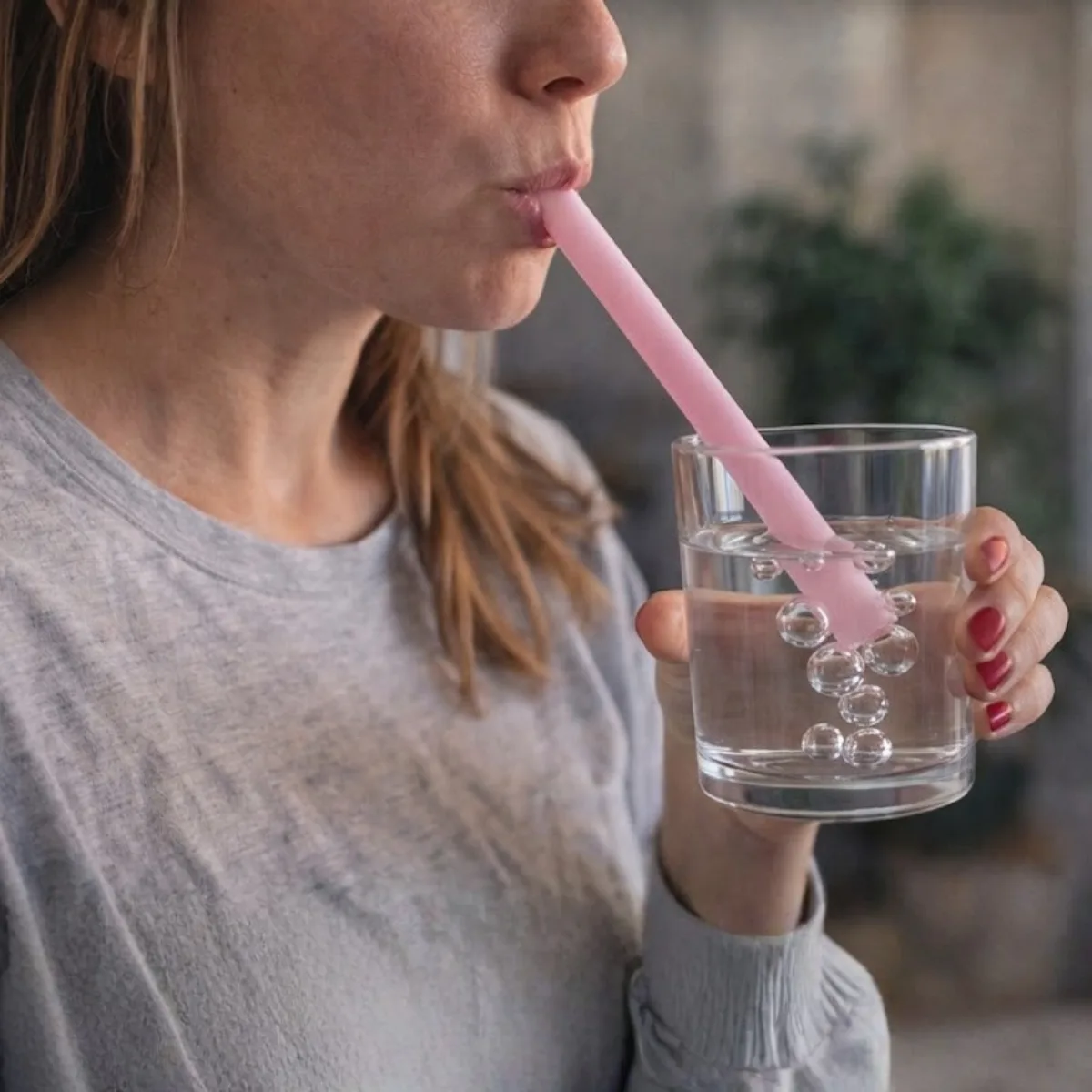
Your voice is your instrument. If you sing or speak for a living, or simply love doing it, water is one of the simplest tools you have for taking care of it.
So what kind of water serves your voice? Cold, warm, or room temperature? Does pH matter? And where do steam, humidifiers and nebulizers fit? In this guide I’ll walk you through each question and tell you what the research supports and where it is still thin.
Why Hydration Matters for Your Voice
Your vocal folds (also called vocal cords) open and close many times a second when you speak or sing. They do that under a thin, slippery layer of mucus. When you are well hydrated, that layer stays thin and the folds stay supple. When you are dry, you feel it: your voice tires sooner and you want to clear your throat.
Here is the part worth knowing. The water you drink never touches your vocal folds. You swallow it down a different pipe. Your body absorbs it and uses it to keep the tissue and the mucus layer in good condition from the inside. Voice scientists call this systemic hydration.
That takes time, so drink steadily through the day. If you drink a big bottle right before you sing, your body has little time to put it to use.
Researchers also describe a second kind, surface hydration: the moisture in the air you breathe, which passes directly over your vocal folds. You want both. A 2010 review of the research found that drying the voice, from the inside or from the surface, makes it harder to produce sound. The same review was candid that strong evidence for specific hydration treatments was still limited (Sivasankar & Leydon, 2010).
The Best Water Temperature for Your Voice
Room temperature water is my everyday choice. You can sip it steadily all day, before a warm-up, and between songs or speeches.
Warm water, or a caffeine-free herbal tea, feels soothing when your throat is tired or you feel congested. Keep it comfortably warm. Very hot drinks can irritate your throat.
Cold water hydrates you just as well. If a cold drink feels bracing or tight to you right before you sing, save it for after the show.
Ted’s Tip: Start your morning with room temperature or warm water and sip through the day. A simple check: when your urine is pale yellow, you are probably well hydrated.
Does pH Matter? Alkaline Water and Reflux
For everyday hydration, plain tap or bottled water does the job.
pH matters more if you deal with reflux that reaches your throat. Doctors call it laryngopharyngeal reflux, or LPR. Stomach contents carry a digestive enzyme called pepsin, and pepsin can irritate the tissue around your vocal folds.
In a 2012 laboratory study, alkaline water at pH 8.8 switched off human pepsin and neutralized acid far better than conventional bottled water (Koufman & Johnston, 2012). That work was done in a lab dish. It suggests alkaline water may be a useful addition for someone with reflux, and it has yet to be shown in large studies of people. If you suspect reflux, with signs such as morning hoarseness or frequent throat clearing, see your doctor. Alkaline water is something to discuss with them alongside treatment.
If you have reflux, notice how soda, citrus juice and carbonated drinks sit with you before you sing or speak, and choose plain water when your voice matters that day.
Alkaline water at home: Kangen Water
If you’d like alkaline water every day, you can make it at home. Kangen Water comes from a countertop system made by Enagic. You connect it to your kitchen tap, it filters and ionizes the water, and you choose the pH you want for drinking. You fill your own glass or bottle, so you also buy far fewer plastic bottles.
Ted’s Tip: Interested in trying Kangen Water for your voice and your home? Talk with Pam at VP Hydration. Pam is a friend, a trusted partner, and a supporter of Ted’s Voice Academy, and she has helped many local artists and educators set up their water at home.
- Website: www.vphydration.org
- More information: www.VPHydration.info
- Phone: 253-732-2020 or 360-259-7441
Humid Air, Humidifiers and Nebulizers: Moisture You Breathe
Because the water you drink never reaches your vocal folds directly, the air you breathe is the other half of hydration. This matters most in dry climates, in heated or air-conditioned rooms, on airplanes, and after heavy voice use.
Warm, humid air can feel soothing, and you can enjoy it with what you already have at home. Sit in a steamy bathroom with a hot shower running and the door closed, and breathe normally for a few minutes. A personal steam inhaler from a pharmacy is another comfortable option. Choose one of these over a bowl of hot water with a towel over your head. A spilled bowl can cause serious scalds.
Humidifiers keep the air in a room moist. Run one in your bedroom while you sleep, especially in winter when the heat is on. Follow the cleaning instructions that come with it.
Nebulizers with isotonic saline make a fine saltwater mist that you breathe in. In a small 2015 study, eight people whose medical condition causes a very dry throat used nebulized saline twice a day. Their voice measures improved by about 20 percent during treatment, and slipped back when they paused it (Tanner et al., 2015). That is a small group with a specific condition, so treat it as a promising sign and see how it feels for you.
Ted’s Tip: Keep a personal steam inhaler or a saline nebulizer in your vocal care kit, and use it before long rehearsals or speaking days. You’ll find more on warm, humid air and home care in my Vocal Health Hub.
Vocal Hydration Quick Tips
- Hydrate ahead of time. Sip water steadily through the day, starting well before you sing or speak.
- Add water when you drink alcohol. Alcohol is dehydrating.
- Enjoy your coffee and watch how you feel. A cup or two of coffee doesn’t cause real dehydration in regular drinkers, because the body adjusts. If you’re struggling with dryness and drinking a lot of caffeine, cutting back is a fair experiment.
- Watch for reflux signs such as morning hoarseness or frequent throat clearing, and talk with your doctor about them.
- Breathe moist air. Use a humidifier where you sleep and work.
- Choose comfortable temperatures for your drinks before you sing: warm or room temperature.
Bonus Tip: Microplastics in Your Water
Researchers have found microplastics in both bottled water and tap water. What long-term exposure means for our health is still being studied.
Ted’s Tip: If you’d like to lower your exposure while that research continues, filter your water at home and carry it in a glass or stainless steel bottle. You’ll also buy fewer disposable plastic bottles.
A Kangen Water system is one way to do both at home. You filter your water at the tap and fill your own bottle. To learn more or explore a system for your home or studio, reach out to Pam at VP Hydration at www.vphydration.org or 253-732-2020.
Final Thoughts
Hydration comes down to a few steady habits. Drink water through the day. Choose a temperature that feels comfortable. Keep the air you breathe moist. If reflux is part of your picture, bring your doctor in. Do those things and you give your voice what it needs to stay strong through a long rehearsal, a performance, or a full day of speaking.
If your hoarseness or discomfort lasts more than two weeks, see a laryngologist or a speech-language pathologist who specializes in voice.
Ready to work on your voice? I coach singers and speakers one-on-one, whether you are recovering from vocal fatigue or preparing for a big performance. Reach out here to start a conversation.
Sources
- Sivasankar, M., & Leydon, C. (2010). The role of hydration in vocal fold physiology. Current Opinion in Otolaryngology & Head and Neck Surgery, 18(3), 171–175.
- Koufman, J. A., & Johnston, N. (2012). Potential benefits of pH 8.8 alkaline drinking water as an adjunct in the treatment of reflux disease. Annals of Otology, Rhinology & Laryngology, 121(7), 431–434.
- Tanner, K., et al. (2015). Nebulized isotonic saline improves voice production in Sjögren’s syndrome. The Laryngoscope, 125(10), 2333–2340.
Ted Chamberlain teaches voice at Ted’s Voice Academy in Lacey, Washington. He coaches both singers and speakers using the Adaptive Voice Framework, a system built on forty years of vocal teaching that treats every voice as a unique instrument.
Last updated: November 12, 2026