
There is a deeply rooted idea in the vocal world that a singer belongs to one genre. “You’re a classical singer.” “She’s a pop singer.” As if a single style defines what a voice is allowed to do.
After nearly four decades of working with voices — in studios, choral rehearsals, competition stages, boardrooms, and classrooms — I can tell you this: the singers who develop the deepest command of their instrument are the ones who explore the full range of what their voice can do.
The research now backs this up. Convincingly.
Your Voice Is One Instrument With Many Settings
Here is the physiological reality: you have one larynx, one set of vocal folds, one respiratory system, one resonating tract. Every genre asks that same anatomy to do different things — different positions, different airflow rates, different resonance strategies, different registration balances.
Classical singing typically calls for a lower laryngeal position, continuous vibrato, and a resonance strategy built around what acousticians call the singer’s formant — the ring that helps a voice carry over an orchestra. Pop and CCM (Contemporary Commercial Music) styles often favor a higher larynx, selective vibrato, and speech-like vowel shapes. Musical theatre blends elements of both. Barbershop demands precise vowel alignment and coordinated tuning across an ensemble. Gospel draws on wide dynamic contrast and emotionally driven vocal weight shifts.
Each of these represents a different set of choices within the same healthy instrument. If you have studied the Adaptive Voice Framework, you already recognize this — these are simply different settings on the Eight Adjustable Dials.
What Research Reveals About Genre-Specific Vocal Load
A landmark study out of UT Southwestern Medical Center examined over 1,000 patient records and found something worth paying attention to: each genre produces its own characteristic pattern of vocal fold changes. Opera singers showed higher rates of chronic lesions like pseudocysts. Praise and worship singers showed more acute changes like hemorrhagic polyps. The researchers concluded that the style of singing, acoustic environment, and vocal demands unique to each genre clearly influence both the frequency and type of tissue changes that develop.
Consider what this means. Singing in only one genre loads the same tissue in the same way, in the same patterns, session after session. That is repetitive stress — the vocal equivalent of a runner who only trains on flat pavement and never varies the terrain.
A separate longitudinal study from the University of Miami tracked 57 undergraduate singers over three years. By year three, nearly 40% of musical theatre singers and over 20% of classical singers showed evidence of vocal fold changes — even at the student level. Every genre carries vocal load. The question is whether you manage that load through variety or concentrate it through repetition.
Cross-Training Distributes the Load
Athletes have understood this for decades. A distance runner who also swims, stretches, and does lateral movement builds a more resilient body. The variety itself is protective.
The voice works the same way.
Training across genres asks your vocal mechanism to operate in a wider range of configurations. Different laryngeal heights. Different airflow pressures. Different registration balances. Different resonance shapes. This distributes mechanical load across a broader set of tissue configurations.
Dr. Ingo Titze’s foundational work in vocology — the science of voice habilitation — supports this principle. His research on semi-occluded vocal tract exercises (tools like straw phonation, lip trills, and humming) demonstrates that exercises transcending genre boundaries reduce vocal fold collision, support mixed registration, and lower the threshold pressure needed to produce sound. These are genre-neutral benefits that strengthen the instrument itself.
The practical takeaway: a voice that can move fluidly between a legit musical theatre head voice, a chesty pop belt, a classical messa di voce (a controlled swell from soft to loud and back), and a barbershop-tuned unison vowel is a well-conditioned voice.
The Adaptive Voice Framework Was Built for This
This is exactly why the AVF organizes vocal development by function rather than by genre.
The Five Core Pillars address the foundational areas of vocal production that every singer benefits from regardless of style: Body Organization, Breath, Phonation, Resonance, and Expression. The Eight Adjustable Dials describe the real-time parameters — breath pressure, phonation mode, laryngeal position, resonance shape, onset, articulation, vibrato, and emotional intent — that a singer can consciously modify to produce any style of sound.
When you think in Dials, genre becomes a set of calibration choices.
A classical aria and a pop ballad differ in where the Dials are set. A singer who understands this can move between styles with awareness and intention, making informed choices about laryngeal height, vowel tuning, and registration balance for each musical context.
I see this play out in every lesson, every rehearsal, every coaching session. Singers who understand their voice as a flexible instrument learn faster, recover from vocal challenges more easily, and perform with greater confidence across a wider range of musical demands.
Versatility Unlocks Deeper Expression
There is one more piece that connects directly to what the AVF identifies as the Master Dial: Emotional Intent.
Every genre exists because human beings needed a different emotional vocabulary. Opera was built to express grand-scale emotion across large spaces. The blues emerged from grief and resilience. Gospel channels spiritual ecstasy. Barbershop crystallizes the warmth of close harmony and shared feeling. Pop distills emotion into direct, intimate connection.
Training across genres expands your emotional palette. You learn more ways to mean what you sing. And that is significant, because Emotional Intent is the ignition system that makes technique come alive. When emotional truth leads, the Dials self-coordinate. The technique serves the expression.
A singer who has genuinely lived inside multiple styles has a richer vocabulary for communicating what it means to be human through sound.
Five Reasons to Broaden Your Vocal Training
Repetitive load becomes distributed load. As the research shows, each genre creates its own pattern of vocal tissue loading. Variation in vocal use is itself a form of protection.
Your neuromuscular system stays responsive. A singer trained exclusively in one style develops deeply grooved motor patterns. When musical demands shift — and they always do across a career — flexible training keeps the motor system adaptable.
Your career options expand. Musical theatre has become more pop-influenced. Church music spans from hymns to CCM. Community choruses perform everything from Brahms to Queen. Range in your training creates range in your opportunities.
Pedagogical boundaries dissolve. Voice science has documented that the physiological demands of classical and CCM singing differ significantly. Understanding both gives you a more complete picture of your own instrument.
Your expressive range grows. Every new genre you explore gives you another emotional language. The more ways you can make sound, the more ways you can connect with an audience.
The Research Is Moving This Direction
The academic world is recognizing what working singers and thoughtful teachers have known intuitively. A study published in the Voice and Speech Review concluded that higher education should more fully recognize that students can be taught multiple singing styles in a healthy way, making them more marketable as performers and teachers. Belmont University’s reimagined vocal pedagogy program now integrates classical, commercial, and musical theatre instruction under one roof. A 2026 scoping review in Frontiers in Education identified cross-genre learning as a core dimension of 21st-century vocal pedagogy.
The direction is clear. The opportunity is yours to act on.
What This Means for Your Voice
If you have been thinking of yourself as “only” a classical singer, or “only” a pop singer, or “only” a choir singer, consider this: your voice is an instrument. Genres are things you do with it.
The more things you can do with it — healthily, intentionally, with awareness — the stronger, more resilient, and more expressive that instrument becomes.
This is the work I do at Ted’s Voice Academy. Whether you are preparing for auditions across multiple styles, singing in a chorus and curious about what your voice is actually doing, navigating between hymns and contemporary worship sets, or simply wanting to grow as a singer — the Adaptive Voice Framework gives you the language and tools to develop your voice as a whole instrument.
Ready to explore what your voice can really do?
Schedule a consultation at Ted’s Voice Academy →
Go Deeper with the AVF Book Series
The ideas in this article — training by function, understanding your voice as one flexible instrument, using the Dials to move between styles with intention — all come from the Adaptive Voice Framework. If this way of thinking resonates with you, the AVF books give you the complete system.
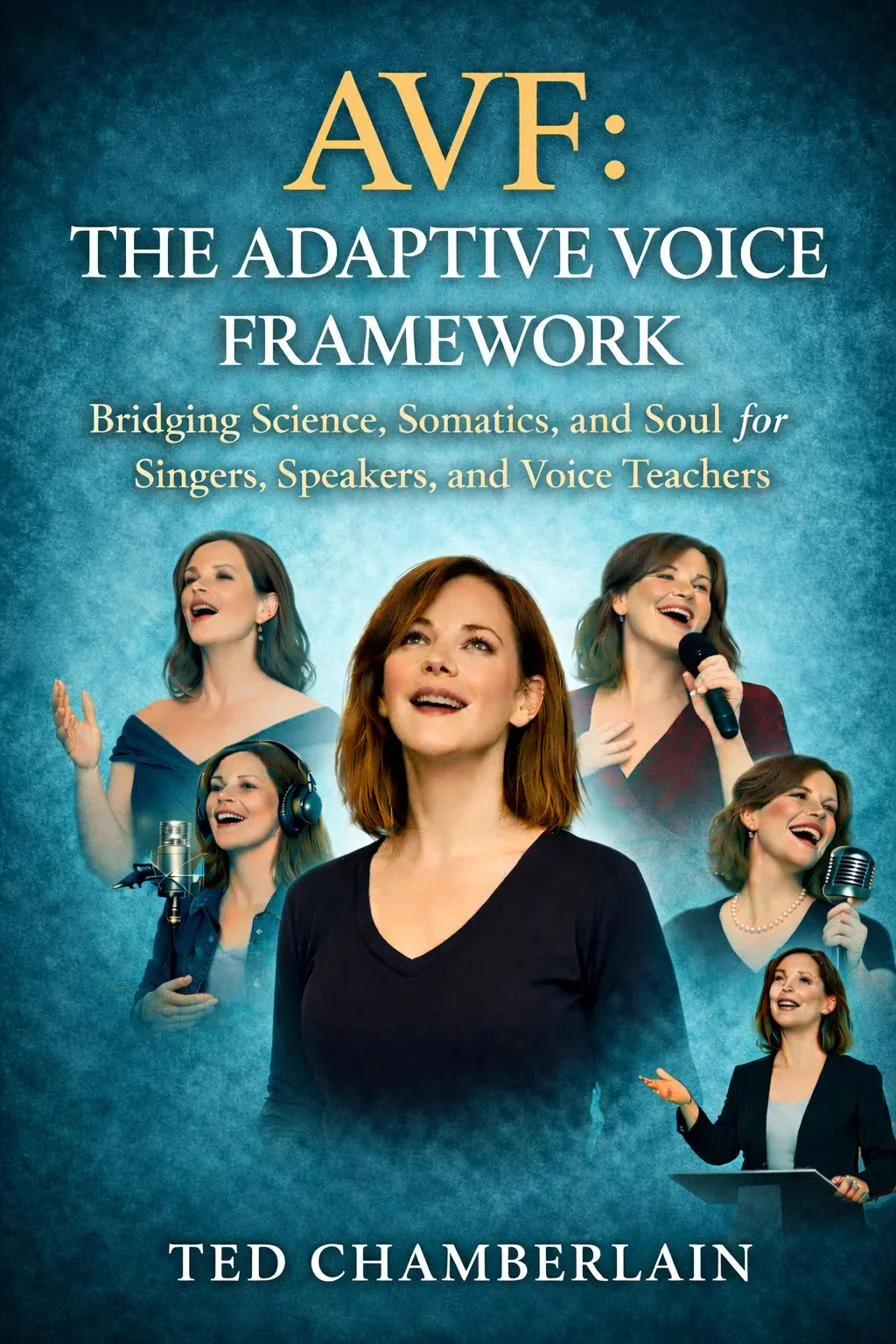
AVF: The Adaptive Voice Framework lays out the full system — the Five Pillars, the Eight Adjustable Dials, and the science behind how your voice actually works. Whether you sing, speak professionally, or teach, this book gives you a unified language for understanding and developing the voice.
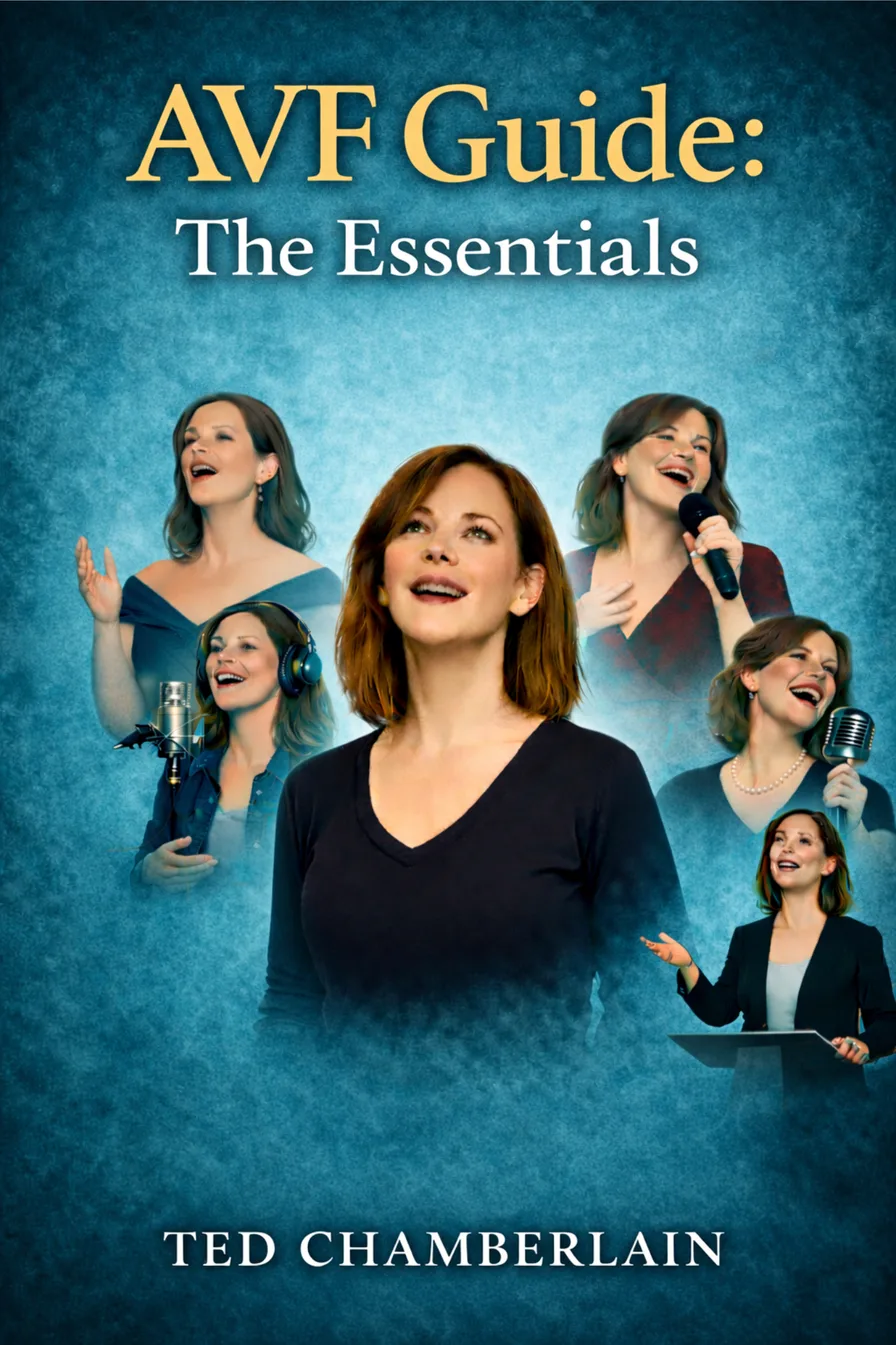
AVF Guide: The Essentials is a concise entry point. If you want the core concepts and practical tools in a shorter read, start here.
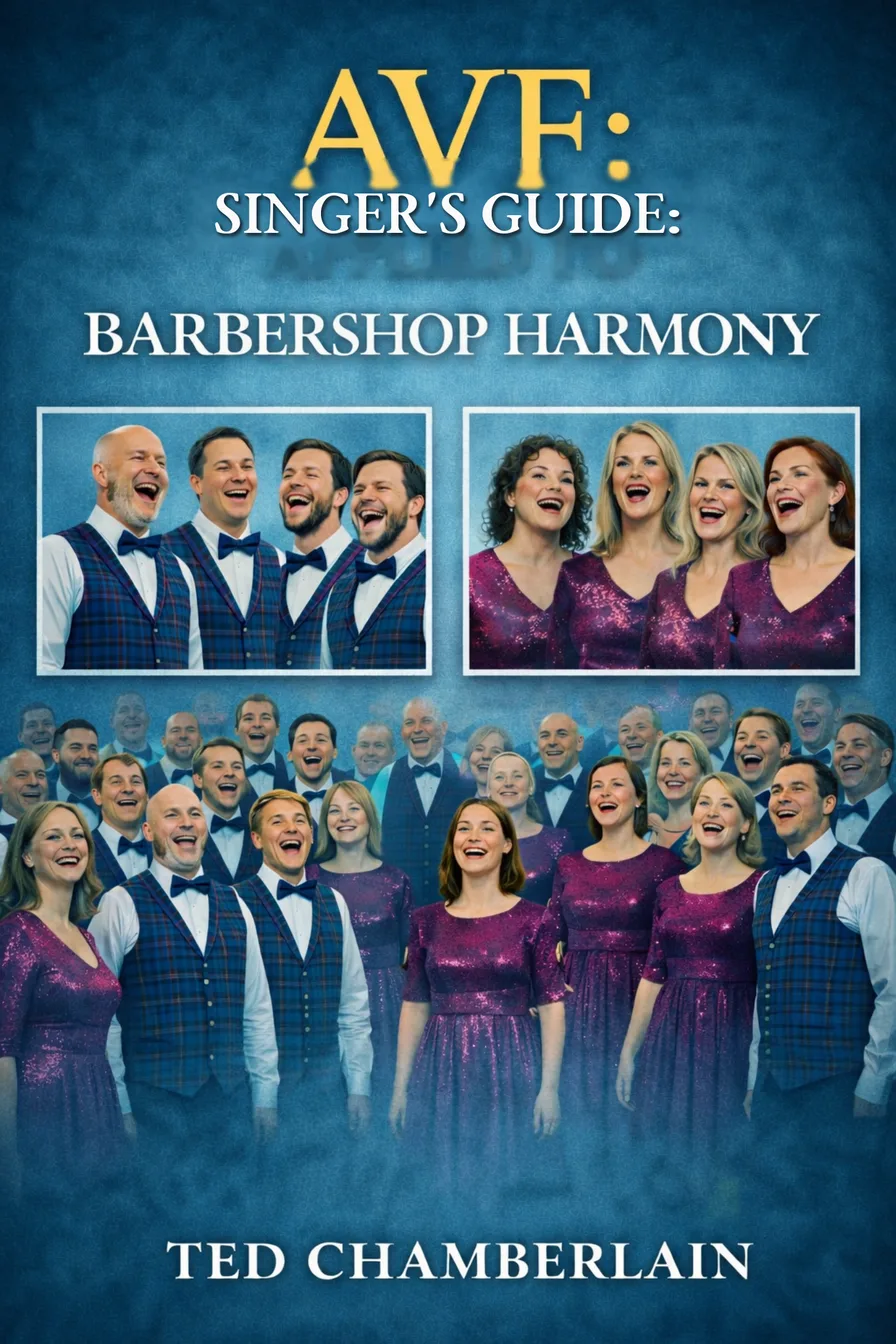
AVF Singer’s Guide: Barbershop Harmony applies the framework directly to ensemble singing — vowel alignment, collective resonance, coordinated onset, and the unique vocal demands of close-harmony performance.
All three are available in paperback and Kindle on Amazon. Learn more about the AVF and the book series →
Your voice carries your presence into the world. It deserves the full range of what it can become.
Ted Chamberlain is the founder of Ted’s Voice Academy in Lacey, Washington, and the creator of the Adaptive Voice Framework (AVF). He has nearly four decades of experience in vocal pedagogy spanning singing, speaking, choral direction, and voice science. His books are available on Amazon.
Sources
- Childs, L.F., et al. “Association of Genre of Singing and Phonotraumatic Vocal Fold Lesions in Singers.” The Laryngoscope, 133:1683-1689, 2023.
- Rotsides, J., et al. “Laryngeal Pathologies Associated with the Genre of Singing and Professional Singing Status in a Treatment-Seeking Population.” The Laryngoscope, 131:2076-2080, 2021.
- Zuim, A.F., et al. “Independence of Vocal Load from Vocal Pathology Across Singing Genres.” Journal of Voice, 2021.
- Bretl, M., Lloyd, A., et al. University of Miami longitudinal study of vocal fold pathology in undergraduate singers. The Laryngoscope, 2023.
- “Bel Canto to Punk and Back: Lessons for the Vocal Cross-Training Singer and Teacher.” Voice and Speech Review, Vol. 15, No. 3, 2021.
- Schmidt, A.P. “Choral Educator Questionnaire on Vocal Pedagogy and Non-Classical Repertoire.” International Journal of Research in Choral Singing, Vol. 12, 2024.
- “21st-Century Skills in Vocal Pedagogy: A Scoping Review.” Frontiers in Education, 2026.
- Belmont University M.M. Vocal Pedagogy Program overview, 2024.
- Titze, I.R. “Voice Training and Therapy with a Semi-Occluded Vocal Tract: Rationale and Scientific Underpinnings.” Journal of Speech, Language, and Hearing Research, 49(2):448-459, 2006.
- CCM Vocal Pedagogy Institute, Shenandoah Conservatory, 2026 faculty and curriculum.